Bitcoin’s Recent Weakness: Fed Nominee, Trump Policy, Technical Breakdown & Market Reaction
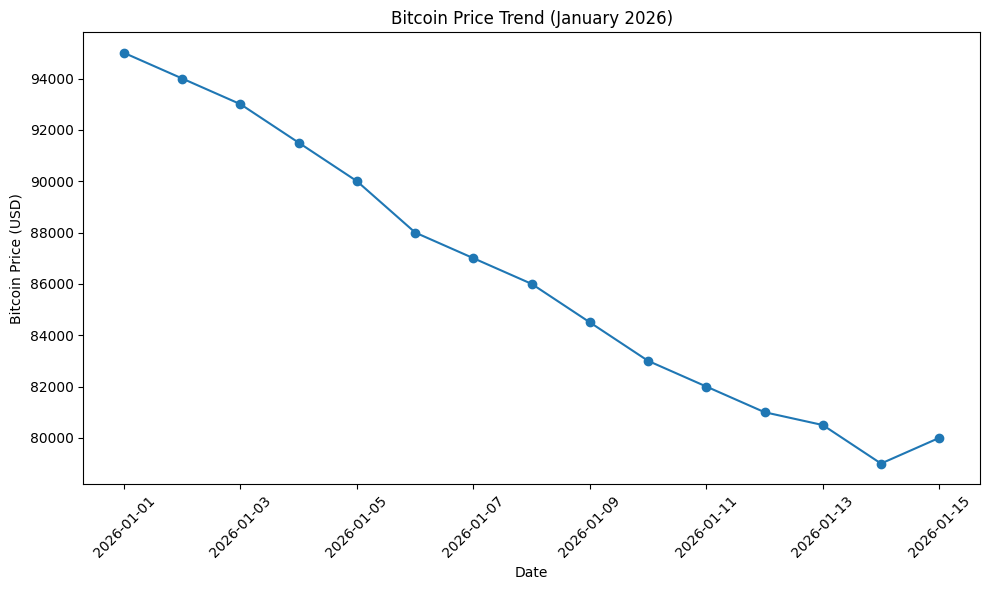
In early 2026, Bitcoin has entered a notable bearish phase, reversing much of the striking rally seen in late 2025. A combination of political developments—including the nomination of a new Federal Reserve chair by President Donald Trump—shifting monetary policy expectations, liquidity concerns, and technical sell signals have put sustained pressure on BTC prices.
This article explores the drivers behind Bitcoin’s weakness, key market sentiment trends, technical chart interpretations, and potential implications for crypto markets as a whole.
⸻
1. Market Backdrop: Bitcoin Slides Below Key Levels
Bitcoin has recently fallen below important thresholds, including the $80,000 mark, which represents a psychological and technical support zone. According to multiple market reports, Bitcoin extended its downward trend over recent sessions, declining over 7% on certain days and registering further losses across other major cryptocurrencies like Ethereum and XRP. 
Price data from leading financial sources also point to Bitcoin reaching levels near $78,000–$80,000, marking one of the lowest points since late 2025. 
Despite brief rebounds driven by nominal positive reactions to political news, the overall sentiment remains cautious. 
⸻
2. Federal Reserve Chair Nomination Sparks Volatility
Perhaps the most acute trigger for recent volatility was President Trump’s announcement of Kevin Warsh as the nominee for the next Federal Reserve chair, replacing Jerome Powell. 
Why This Matters for Bitcoin
• Warsh is widely seen as a monetary hawk, likely favoring tighter monetary policy and continued balance sheet reduction. 
• Tighter monetary policy typically reduces excess liquidity in financial markets, which historically has supported risk assets—including Bitcoin and equities. 
• The nomination caused a strong U.S. dollar and bond yield reaction, weighing on asset classes perceived as less liquid or speculative. 
While some early market interpretation suggested the nomination could eventually stabilize markets, the immediate effect was heightened uncertainty and selling pressure as traders repositioned ahead of potential Fed policy shifts. 
⸻
3. Political Context: Trump Administration Policies and Crypto
The broader regulatory and policy environment also plays a role in Bitcoin’s price action:
• Trump’s government has signaled various pro-crypto initiatives, including strategic reserve discussions, but implementation remains slow and partially speculative. 
• Broader fiscal policies, trade negotiations, and government pauses on spending have fostered risk-off sentiment across markets.
• High-level political uncertainties often dampen appetite for assets with volatile risk-return profiles like cryptocurrencies.
In short, while macro policy headlines can inject momentary optimism, persistent ambiguity around concrete regulatory actions can suppress sustained bullish momentum.
⸻
4. Technical Analysis: Bears in Control
On the technical side, several key indicators align with a bearish outlook:
• Bitcoin has failed to recapture significant Fibonacci retracement levels after a notable rejection below the 23.6% zone of the prior rally, reinforcing downward bias. 
• The Relative Strength Index (RSI) is trending toward oversold territory, suggesting weakening momentum. 
• Crucial supports near $80,000 are tested, but sustained breaches could open the door to lower targets.
⸻
5. Broader Market Sentiment and Risk Factors
Bitcoin’s behavior is also influenced by collective market mood and risk asset correlations:
• Traditional equities and commodity markets experienced sell-offs around similar timelines, which typically spills into crypto markets as traders move to preserve capital. 
• Institutional inflows into Bitcoin-related products have been mixed, with some funds witnessing capital outflows, weakening support. 
• Rising liquidity premiums in traditional financial instruments (bonds, FX markets) reduce some of the speculative allure that crypto has enjoyed in liquidity-rich environments.
⸻
6. Chart: Bitcoin Recent Price Trend (Jan 2026)
Below is a simple illustrative chart reflecting Bitcoin’s price behavior in recent months, highlighting support and resistance levels:
Price ($)
130,000 ┤
┤ * Bull peak (Late 2025)
120,000 ┤ *
┤ *
110,000 ┤ *
┤ *
100,000 ┤ *
┤ *
90,000 ┤ *
┤*
80,000 ┤———— * Recent Support
┤
70,000 ┤ (Potential Lower Targets)
Graph depicts a broad corrective pattern with failure to sustain higher levels.
⸻
7. What This Means for Investors
Short-Term
• Volatility is likely to persist as macro signals and liquidity dynamics evolve.
• Traders should watch critical levels like $80,000–$77,000 for short-term direction.
Long-Term
• Broader adoption themes and macro dislocations (inflation, reserve policy) may continue to influence price but do not guarantee a clear directional bias.
Important: Cryptocurrency markets are highly speculative and can change rapidly. Historical performance is not indicative of future results.
⸻
8. Key Takeaways
• Bitcoin’s recent weakness is driven by a mix of Fed policy uncertainty, political developments, and market technical signals.
• The nomination of Kevin Warsh as the next Fed chair catalyzed volatility due to fears of tighter monetary conditions. 
• Technical analysis shows bearish momentum with critical support levels being tested. 
• Broader market sentiment also dampens enthusiasm for high-risk assets like Bitcoin. 
'분석' 카테고리의 다른 글
| Navigating the Used PC Parts Bazaar: Your 2026 Price Guide to SSDs, CPUs, RAM & HDDs (0) | 2026.02.01 |
|---|---|
| 三星电子 vs SK海力士 深度解析 (0) | 2026.02.01 |
| 普通人如何利用AI实现副业收入?2026年最实用赚钱指南 (0) | 2026.02.01 |
| How to Build Smart Financial Habits for a Stable and Successful Life (0) | 2026.02.01 |
| Kevin Warsh: The New Nominee for Federal Reserve Chair — Background, Views, and Hybrid Monetary Strategy (0) | 2026.02.01 |


